
2023 Cohort
|
Area
HDiC Research Interests
Bi/multilingualism, Second Language Acquisition, Social Network Science, Psycholinguistics, Language Variation Vertical Divider
|
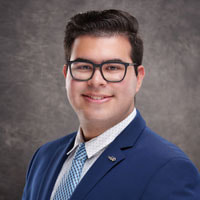
Reinaldo is a first-generation Ph.D. student in the UCI School of Education's HDiC concentration. Reinaldo holds a dual Bachelor of Arts in Linguistics and Russian Studies and a Russian-English Translations Certificate from the University of Florida (UF). During his undergraduate studies at UF, he worked at Brain, Language, and Bilingualism lab, where he investigated how bilinguals use their languages in different social contexts by applying social network science measures. As a result, Reinaldo completed an honors thesis project titled “Connecting the Dots: Social Network approaches to capture variability across the lifespan of bilinguals and its consequences for cognition”. Reinaldo plans to continue researching language variability in bilingual speakers during his graduate studies. One of his goals is to create a dialogue between linguistic researchers and the general population to address the importance of language diversity and bilingualism.
|
|
Area
EPSC Research Interests
Early Childhood Education, Early Childhood Policy, Quality Measurement and Improvement Systems Vertical Divider
|
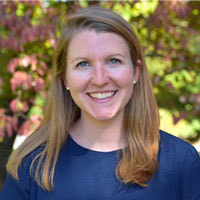
Caroline Chamberlain is a current Ph.D. student in the School of Education at the University of California, Irvine in the area of Education Policy and Social Context. She is interested in high-quality early childhood education and statewide quality improvement systems. Caroline received her B.A. in Psychology and French, as well as her M.Ed. in Educational Psychology-Applied Developmental Science from the University of Virginia. She worked at UVA’s Center for Advanced Study of Teaching and Learning (CASTL) on statewide initiatives to support early childhood programs in Virginia. Caroline also has experience working in preschool classrooms, and she spent a year teaching English to elementary school students in France.
|
|
Area
EPSC Research Interests
Higher Education Policy, Equity Frameworks, College Transfer Student Transitions Vertical Divider
|
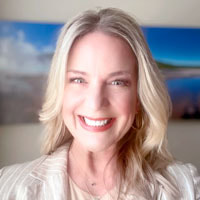
Faith is a Ph.D. student in the School of Education, specializing in Education Policy and the Social Context. She holds a B.A. in Social Policy and Public Service from the University of California, Irvine, where she conducted extensive research on the experiences of transfer students, particularly those from first-generation, low-income, and historically underrepresented backgrounds, during their transition to a 4-year university. Guided by her early life experiences as a low-income single parent and currently as a post-traditional student returning to higher education after a 28-year break, Faith's research aims to examine the factors that influence successful adjustment and flourishing in college transfer students. Throughout her academic journey, Faith remains committed to significantly improving education policy and promoting equity and opportunity in higher education.
|
|
Area
EPSC Research Interests
Early Childhood, Educational Policy and Program Evaluation, Educational Interventions Vertical Divider
|
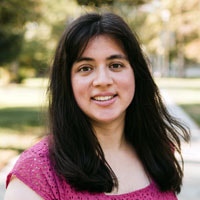
Gabriella (Gabi) Gonzalez earned a B.A. in Psychology and a B.S. in Neurobiology, Physiology, and Behavior from the University of California, Davis. She also earned an M.S. in Quantitative Psychology and an M.A. in Clinical Psychology with a certificate of Institutional Research from Ball State University. During her time at Ball State University, she served as an intern in the university accreditation office evaluating the efficacy of high-impact practices within Ball State. She is interested in utilizing quantitative methods and assessments to reform and evaluate educational policies, practices, and programs specifically within the pre-K population. In addition, she is interested in finding cognitive and environmental factors responsible for improving learning as well as creating interventions to aid in learning. After pursing her PhD in Education, she hopes to work within the state government and/or school districts to evaluate educational policies, practices, and programs as well as student learning outcomes.
|
|
Area
TLEI Research Interests
Online Learning, Learning Analytics, Educational Technology, Artificial Intelligence in Education Vertical Divider
|
Jinwon Kim is a Ph.D. student in the UCI School of Education specializing in Teaching, Learning, and Educational Improvement (TLEI). He works with Dr. Di Xu on research projects in the field of online learning. He received his B.A. in Psychology and M.A. in Clinical Psychology from Korea University. Additionally, he has work experience as a data scientist, working on projects that aim to promote college students’ academic engagement and well-being through learning analytics and AI algorithms. His research interest lies in the intersection of education, psychology, and AI. He aims to investigate how students’ engagement and psychological factors influence their academic achievement in online learning environments. He is also interested in building predictive models to identify at-risk students and support their academic success. To build these models, he plans to leverage educational data collected unobtrusively from a Learning Management System (LMS).
|

|
Area
HDiC Research Interests
College Access and Equity, STEM, Students of Color, Program Evaluation, Educational Environments Vertical Divider
|
Yoomee Lee is a Ph.D. student in the School of Education specializing in Human Development in Context (HDiC). She received her B.A. in Psychology and Social Behavior from the University of California, Irvine, and M.A. in Higher Education and Organizational Change from the University of California, Los Angeles. Yoomee is a college admissions consultant and established her global business in educational consulting to democratize information on college admissions. Her efforts have reached 100,000+ students in more than 32 countries. She is also the founder and director of Global Emerging Leaders, a nonprofit organization that educates and empowers young individuals to become positive advocates for change. Her research interest broadly revolves around promoting access, persistence, and success of underrepresented students in STEM. She is particularly interested in promoting diversity and equity in STEM through understanding how institutional support impacts the experiences and outcomes of women and students of color in STEM.
|
|
Area
HDiC Research Interests
Reading Comprehension, Literacy Development in Multilingual Learners, Individual Differences & SLA, Language Assessment Vertical Divider
|
Youjin received her MA in English Language Education at Seoul National University and her BA in English Language and Literature from Sungkyunkwan University. Her personal language learning experiences have inspired her studies and research toward a larger understanding of L2 proficiency. Her current research interests include literacy development, linguistic and cognitive aspects in reading, and IDs in second language learning. As a doctoral student, Youjin hopes to delineate multilingual learners’ reading and writing processes and find ways to aid effective second/foreign language instruction.
|
|
Area
TLEI Research Interests
Writing Instruction and Assessment, Peer Feedback/Interaction, Self-Regulated Strategy Development, Writing Intervention for Special Education Populations, Writing Teacher Education Vertical Divider
|
Wentao Li is a writing researcher in the School of Education at the University of California, Irvine, USA. His research focuses on issues that are central to advancing writing research and improving writing instruction in and beyond schools and universities. These topics include writing instruction and assessment, peer feedback/interaction, self-regulated strategy development, writing intervention for special education populations, and writing teacher education. His research has appeared in a range of scholarly venues, including Assessing Writing, Reading and Writing, Assessment and Evaluation in Higher Education, Frontiers in Psychology, the Journal of Pragmatics, the Journal of Multilingual and Multicultural Development, and the Journal of English for Academic Purposes.
|
|
Area
EPSC & HDiC Research Interests
Education Policy, First Gen, Wellness, Mental Health, Neuroscience, Human Development, Poverty, Social Mobility Vertical Divider
|
Jesse Giovanni Sánchez has served as an education advocate for first-generation college students across the United States as well as in Mexico and Brazil. A First Gen student himself, Giovanni graduated from Harvard University with honors and is hoping to continue his student advocacy work by pursuing a PhD at the intersection of Education Policy, Human Development and Wellness/Mental Health.
|
|
Area
HDiC Research Interests
Parent-Child interactions, Culturally responsive learning technologies, Family interactions with learning technologies, Co-design, Latine Families Vertical Divider
|
I am currently a Ph.D. Student in Human Development in Context at the University of California Irvine, School of Education. I study family learning with technology from a culturally informed perspective. I am interested in both designing and assessing learning technologies that respond to the needs and cultural practices of Latine families in order to ensure that the sphere of digital education is an accessible and inclusive space. Prior to commencing my studies in graduate school, I earned my B.A. in Education Sciences from the University of California Irvine. During my time in undergrad, I worked under the mentorship of Dr. Bustamante at the STEM Learning Lab and Dr. Ahn at the Design and Partnerships Lab, where I co-designed playful learning landscapes with a local nonprofit (SAELI) and I designed characters and games for an application that creates STEM learning opportunities for families.
|
|
Area
HDiC Research Interests
Academic Achievement, Adolescent Development, Cultural Identity, Prosocial and Moral Development Vertical Divider
|
Kathy Tran is a Ph.D. student at the University of California, Irvine’s School of Education, specializing in Human Development in Context. She plans to research the multicultural experiences of students of color, their families, and students’ academic achievements. Before attending UC Irvine, Kathy received a B.A. in Psychology and was a Ronald E. McNair Scholar at California State University, Fullerton. As an undergraduate, she developed her McNair thesis that examined Southeast Asian American college students’ involvement in student cultural organizations and same-race and intraminority friendships as potential predictor variables of belonging.
|

|
Area
EPSC Research Interests
Early Childhood Policy, Educational Interventions, Program Evaluation Vertical Divider
|
Mi Joung (April) Yu is a Ph.D. student in the School of Education, specializing in the area of Education Policy and Social Context. April earned her bachelor’s degree in Government from Cornell University and a master’s degree in Public Administration from Seoul National University. She also worked at the Center for International Development Evaluation and the Korea Institute of Public Administration. Coupled with her academic background in policy research, volunteering with nonprofits serving disadvantaged children shaped her interest in advancing policy and practice to support better educational outcomes for children through research. As a doctoral student, she plans to study early childhood policy, the long-term effects of educational interventions, and program evaluation.
|
2022 Cohort

|
Lourdes M. Acevedo-Farag
HDiC STEM Education, Rational Number Learning, Playful Learning, BIPOC communities, Educational Pipeline |
Prior to pursuing a Ph.D. in Education, Lourdes Acevedo-Farag earned her B.A. in Sociology and Education and M.Ed. in Urban Education from UCLA. As a Latina, first generation college student originally pursuing a STEM major, she recognized the disparity between the STEM oriented skills she brought compared to that of her more affluent counterparts. She then dedicated herself to learning how to reduce this gap in preparation for STEM fields, which ultimately led her to pursue a career in the classroom. While she taught in a variety of grades throughout her 12 year career as a classroom teacher, having taught middle school math to students who did not identify as “math people, sparked her interest in how students from historically marginalized communities persist through the STEM educational pipeline. Her research interests regard interactive, play- and project-based STEM learning, math identity, persistence, and BIPOC communities. As a doctoral student, Lourdes plans to employ mixed-methods approaches to understand how to create effective interventions that facilitate students’ math identities, positively affecting their persistence through the STEM educational pipeline.
|

|
Aaron Ainsworth
EPSC K-12 Educator Labor Markets, Teacher and Organizational Effectiveness, Program Evaluation, Causal Inference |
Aaron Ainsworth is currently a Ph.D. student in Education Policy and Social Context at the University of California, Irvine School of Education where he studies the K-12 education workforce. He is interested in how educator labor markets respond to both in and out-of-school changes and their implications for the preparation, recruitment, development, effectiveness and retention of educators. To that end, he is interested in partnerships with education stakeholders and novel uses of longitudinal administrative data systems. Prior to graduate school, Aaron worked as an elementary and middle school teacher in both traditional public and charter schools in Las Vegas, NV. He has degrees in Education Studies and Political Science from Vanderbilt University and a master’s degree in Elementary Curriculum & Instruction from the University of Nevada, Las Vegas.
|

|
Nicholas Ainsworth
EPSC Early Care and Education Policy, Special Education Policy, Educational Equity, Causal Inference |
Nick Ainsworth is a current Ph.D. student in the School of Education at the University of California, Irvine specializing in the area of Education Policy and Social Context (EPSC). He is broadly interested in early care and education policy as well as special education. In particular, Nick is interested in studying how policies shape access to and outcomes from participating in high-quality early life interventions (care, education, etc.), with a particular focus on children growing up in poverty and students with disabilities or developmental delays. Prior to attending UC Irvine, Nick was a K-2 special education teacher in Las Vegas, NV. He received his master’s degree in Special Education from the University of Nevada, Las Vegas and his bachelor’s degree in Political Science and Education from Vanderbilt University.
|

|
आकृति (Aakriti) belongs to an ethnic group called गढ़वाली (Garhwali) based out of the Himalayan region in India. She grew up in a city called Dehradun and traveled across India for her studies and work. She received her Bachelor's degree in Science from Garhwal University and a certificate in Children’s book illustration. She worked with a rural developmental organization, Gram Vikas and an alternative art school called Poorna Learning Center, designing community based education programs. Her own cultural context highly inspires her work around the acknowledgement and the importance of community in child’s education. Prior to joining the Ph.D. program at School of Education in UCI, Aakriti finished her Masters degree in Education from Azim Premji University. She currently studies the role of community in child's education through arts based research methods. And in her free time she likes to stitch, knit, cook, do watercolor paintings or take long walks.
|

|
Zhenyao Cai
TLEI AI in Education, Human-Computer Interaction, Educational Technology, Collaborative Learning, Playful Learning |
Zhenyao Cai received her B.A. in Computer Science and Art History from Smith College, and M.A. in Educational Technology from Teachers College, Columbia University. Her multidisciplinary academic training shaped her interest in educational technologies, AI education, learning analytics, and out-of-school education. Her previous research projects involved maker education, online collaborative discussion, AI literacy, and AR and embodied learning. Currently, she is working on a citizen science project, aiming to investigate possible ways to involve novices in scientific literature search and motivate them in STEM learning. In the long term, she wants to design and build technologies to involve broader participants in STEM learning and explorations, and she wants to investigate how the design and interactions these technologies afford can shape and transform learners’ cognitive and affective capabilities.
|

|
Daniel Garcia
EPSC Effect of Same-Race Faculty on BIPOC Undergraduate Persistence; Racial Justice; Organizational Change |
Daniel Garcia earned his bachelor’s degree in Psychology from UC San Diego and a master’s in Psychological Science from CSU Northridge. His research agenda is focused on the graduation rates of Black, Indigenous, and People of Color (BIPOC) students, BIPOC faculty, the effect of faculty on persistence, racial justice, and organizational change. For example, the graduation rates of BIPOC students continue to lag behind their enrollment rate (i.e., BIPOC enrollment-graduation gap). Moreover, substantial research demonstrates the positive relationship between BIPOC faculty and BIPOC graduation rates, with a dearth in the literature examining the nature of this relationship. Therefore, his current goal is to use qualitative methods to investigate how BIPOC faculty positively affect BIPOC graduation rates. His long-term goal is to become a tenure-track professor and produce scholarship that addresses how institutions can implement sustainable policies that recruit BIPOC faculty more purposefully—instead of fluctuating racial equity initiatives.
|

|
Mariana Gomez holds a B.A. and M.A. in Child Development from California State University, Los Angeles. Currently, she is a Ph.D. student in the School of Education working with Dr. Elizabeth Peña and Dr. Stephanie Reich. During her undergraduate studies, Mariana worked as a research assistant investigating the substance use, sexual and educational attitudes of emergent adults advised by Dr. Claudia Kouyoumdjian. During this time, she also worked as part of the GO East LA Initiative, supporting a college-going culture in the East LA community. Additionally, advised by Dr. Jessica Morales-Chicas, Mariana worked with the Verizon Innovative Learning STEM Achievers program that provides STEM programming to underserved middle school students and researched Latinx STEM mentors’ cultural wealth that informs their practices. Mariana also has a background in early childhood education, and in higher education student affairs. As a preschool teacher and director in Southern California, Mariana’s found interest in supporting bilingual skills among underserved families to thrive in education. As a professional in student affairs at California State University, Fullerton, Mariana reaffirmed her passion for educational equity work that promotes college-going culture and career success. Currently, her research looks at the components of context that support bilingual skills among underserved young children. Mariana’s goal is to continue integrating an intersecting identities framework that looks at the assets that underserved families possess for their children’s optimal development.
|

|
Siling Guo
HDiC Child Development, Early Childhood Education, Mathematical Cognition, Interventions, Program Evaluation |
Siling Guo is a Ph.D. student in the School of Education with a specialization in Human Development in Context (HDiC). Siling’s primary focus is on understanding how early interventions designed to improve children’s skills or environment will make persistent changes in their learning and developmental outcomes.
Siling’s passion for early education and development led her to earn a master’s degree in Human Development from the University of Pennsylvania’s Graduate School of Education. Past experiences with various educational interventions in rural China, West/North Philadelphia, and Ghana exposed Siling to the links between school-based interventions, child development, and education policy, especially for underserved children. Furthermore, Siling’s academic work is built upon her undergraduate pursuits in early childhood education and psychology, during which she gained classroom experience and background as a teacher, researched teacher-child interaction, and designed early education curricula. |

|
Kunlei He is currently pursuing her Ph.D. in the School of Education at UCI, where her research centers on leveraging AI to enrich children's media and learning. As a member of the Digital Learning Lab, she designs and evaluates conversational technologies to improve children's learning from television and e-books. Before joining UCI, Kunlei accomplished her master's degree at Harvard University. There, she investigated the impact of home and school environments on children's language and literacy development. For more information about Kunlei's research, please visit kunleihe.github.io.
|

|
Before enrolling at UCI School of Education, Heidi practiced as a school psychologist for six years serving students in preschool through twelfth grade. Heidi’s time as a school psychologist encouraged her to purse a Ph.D. in education to study early literacy interventions. Heidi currently works on a project that provides training and resources targeting literacy instruction for rural elementary school teachers in grades kindergarten through third grade.
|

|
Gennie Laramore
HDiC Language and Literacy Development, Early Intervention, Early Childhood Education, Special Education |
Gennie's background is in Birth through Five education and Speech-language pathology.
|

|
Jenny Lee
EPSC Underrepresented Minority Students' Access, Academic Success, and Retention; Culturally Responsive Higher Education Interventions; Educational Equity |
Jenny Lee is a doctoral student in the School of Education specializing in Educational Policy and Social Context. She obtained her Bachelor of Science in Psychology with a minor in Ethnic Studies from California Polytechnic State University. During her undergraduate career, Jenny investigated factors that impact underrepresented students' academic success in higher education. Her commitment to improve access, academic achievement, and retention rates of historically disadvantaged students inspires her research on culturally responsive higher education interventions.
|

|
Julian Levine
TLEI Vocabulary, Language Learning, Reading Comprehension, Digital Literacy, Oral Language, Educational Measurement |
Julian Levine is a Ph.D. student in the UCI School of Education's TLEI cluster, specializing in language and literacy. He is currently conducting research on the Converse to Learn project as a member of the Digital Learning Lab at UCI. He holds a B.A. in economics (minor in psychology) from UC San Diego and an M.A. in education (social research methodologies) from UC Berkeley. Julian taught English in South Korea for two and a half years, and has studied various languages including Korean, Spanish, and Japanese. His ultimate goal is to use his research to help people of all ages achieve success in language learning. You can find more information about Julian and his research here: https://www.julian-levine.com/
|

|
Alaria Long has experience teaching culturally diverse 6th graders math in Northern, Kentucky. Also, she was a part of the UCLA-HBCU Initiative/STEER Research Program which influenced her to become a PhD student at UC, Irvine. Specifically, in Educational Policy regarding Culturally Biased Standardized testing, Test Preparation for Minority Students, Improved Curriculum-based Education, and Career Readiness for Marginalized Students. In the future, she would like to become a Superintendent and encourage minorities into College Readiness Programs or work for Test Companies to stimulate cultural equality in standardized assessments.
|

|
Victoria Nguyen graduated from UC Irvine in 2021 with B.A degrees in both Education and Social Ecology as well as two minors in Global Sustainability and Psychological Sciences. Upon graduating, she continued her work in environmental education as a Recycling Coordinator at Waste Management where she assisted with the implementation and educational outreach of California recycling and food-waste laws. Seeing how the history of environmental education heavily focuses on individual behavior change and often excludes the perspectives and solutions of BIPOC communities, she is pursuing a Ph.D. in Education at UC Irvine specializing in Teaching, Learning, and Educational Improvement (TLEI). Through her research, she hopes to collaborate with K-12 students and undergraduates to collectively take climate action and work toward an equitable and interdisciplinary future in environmental education.
|

|
Seehee is a Ph.D. student in the School of Education specializing in Teaching Learning Educational Improvement (TLEI). She received her B.A. in Sociology at UCLA and M.A. in Teaching at USC. She has gained a strong foundation to instructional practices working in different classrooms, developing and creating skills in using instruction to teach skills to the students. After earning her master's degree she participated in Technology-Enhanced Learning Design (TELD) Lab at Seoul National University and participated in projects in how people learn in online environments. She is interested in and hopes to continue her research in online learning, computer-supported-collaboration-learning, and learning analytics.
|

|
Sina Rismanchian
TLEI Educational Data Science, AI in Education, Educational Technology, Learning Analytics |
Sina Rismanchian is from Isfahan, Iran. His research interests are in the intersection of Computer Science and Education. His focus is on researching how to gain the benefits of computer science and data science to excel K-12 education and to explore educational theories using quantitative methods. He is currently a first-year Ph.D. student at UC Irvine School of Education with a specialization in Teaching, Learning, and Educational Improvement (TLEI). He received his undergraduate degree in Computer Science and Engineering at Sharif University of Technology in Tehran, Iran. His interest in education comes from his previous educational activities such as teaching math to middle-school students, designing a collaborative educational platform for K-12 students, and co-founding an educational society of university students named Rasta in Iran. He works with Dr. Shayan Doroudi in using quantitative methods to explore learning debates, theories, and models.
|

|
Guadalupe is interested in researching how students (K-12, college) motivation and STEM identity are influenced by family and peers, in particular students who belong to groups that have been historically underrepresented in STEM. Overall her goal is to continue to be a part of the research efforts to increase representation in STEM fields and she'd also like to explore issues in educational equity for first-generation college students.
|

|
Kayla Marie Sarte
HDiC Language and Literacy Development, Second Language Writing, Corpus Linguistics |
Kayla is a Ph.D. student studying the first language (L1), task type and other writing conditions’ influence on Noun Phrase (NP) Complexity Development in a learner’s second language (L2) writing. Kayla received her bachelor’s degree in Secondary English Education from Notre Dame of Marbel University, her first master’s degree in English from Ateneo de Davao University in the Philippines, and another master’s degree in General and Applied Linguistics (Advanced, with a university medal) from the Australian National University. Prior to UCI, Kayla conducted different research focusing on mother tongue-multilingual education and using classroom discourse and conversational analyses. At ANU, she became interested in using inferential statistics to answer her language development inquiries. Currently, she’s investigating the NP complexity differences among L1 Groups. In her Ph.D., she hopes to contribute to the discussion on convergent triangulation in the field of corpus linguistics, and build her own L2 English Academic Writing Corpus.
|

|
Seth is interested in designing STEM learning experiences using participatory design research methods that center the values, desires, and aspirations of the groups that will engage with them. He is advised by Dr. June Ahn and co-advised by Dr. Kylie Peppler. Seth received a B.A. in Chemistry and a minor in Science and Mathematics Education from the University of California, Berkeley. More recently, he worked as a research assistant at the Concord Consortium and as a research project manager at BSCS Science Learning studying STEM education and the learning sciences. His experiences conducting design-based research and engaging in co-design with youth, informal science educators, science content experts, and researchers have shaped his current research interests.
|

|
Taylor Wycoff
HDiC Out-of-School-Time Learning; Opportunity Gap; Diversity, Equity, Inclusion, and Racial Justice |
Taylor M. Wycoff is a Ph.D. student in UC Irvine’s School of Education specializing in Human Development in Context (HDiC). She has worked in the youth development field for a variety of organizations in a range of roles, including counselor, instructor, and program manager. Prior to joining UCI, Taylor received her M.S. from the University of Utah’s Department of Parks, Recreation, and Tourism where her research focused on access to and inclusion in summer camp programs. Her current research interests center around out-of-school-time learning, the opportunity gap, and diversity, equity, inclusion, and racial justice in out-of-school-time learning environments. Moving forward, Taylor hopes to engage in community based participatory and mixed-methods research to improve out-of-school-time learning opportunities for historically marginalized youth.
|
2021 Cohort

|
Juan Camilo Cristancho
EPSC Education, Socio-Emotional and Cognitive Development, Neighborhood/Community Violence, Acute and Chronic Stress, Program Evaluation |
Juan is an economist with a master degree in Economics and a master in Public Policy from the Universidad de los Andes in Colombia. His research interests revolve around the effects of neighborhood/community violence on children and adolescents cognitive and social-emotional development, and to explore gradients due to exposure frequency, proximity, and pervasiveness. He aspires to design public policy recommendations to mitigate harmful effects from interacting with unsafe environments, to lessen the burden for children and youth living under the scourge of violence.
|

|
Patricia Fuentes Acevedo
TLEI Teacher Learning, Sociopolitical Perspective to Noticing in Mathematics, Research-Practice Partnerships |
Patricia has a Bachelor's degree in Education, a Mathematics teacher credential, and a Master's degree in Didactics of Mathematics from the Universidad de Concepción, Chile. She worked as a teacher educator at the same institution and as a Mathematics teacher in K-12 settings in Chile. For the last two years, she has worked in Research-Practice Partnerships with elementary schools in Southern California. These partnerships have focused on creating equitable mathematical learning opportunities for predominantly Latine children. She is particularly interested in conducting community-engaged research and exploring sociopolitical approaches to math education, specifically to teacher noticing.
|

|
Alejandro Granados Vargas (he/him), M.A., CCC-SLP is a bilingual speech-language therapist and doctoral student in Education at the University of California, Irvine. His research interests include translanguaging and decolonial applications to research at the intersections of bilingualism and disability.
|

|
Jasmin Hernandez Santacruz
HDiC Bilingualism, Second-Language Acquisition, Cognitive Control, Language Processing |
Jasmin obtained her bachelor's degree from the University of California San Diego in Linguistics and Psychology. Her senior project focused on immersion-based language learning and changes to proficiency in both the L1 and L2. The published article can be found here. Through her research, Jasmin hopes to bridge the gap between research and community and support bilingual communities. More generally, she hopes her research will contribute to the growing field of language science and reveal more of the benefits associated with bilingualism.
|

|
Christina received her B.A. in Applied Mathematics from UC Berkeley, her Ed.M. in Teaching and Curriculum from Harvard University, and her M.S. in Mathematics (Option in Mathematics Education for Secondary School Teachers) from California State University, Long Beach. She was most recently a lecturer in the Department of Mathematics and Statistics at California State University, Long Beach where she supported the mathematics content and pedagogy development of future elementary and secondary teachers. She has previously taught mathematics at the community college, high school, and middle school levels.
|

|
Joseph Hin Yan Lam
HDiC Speech & Language Disorders, Measurement & Assessment, Language Development, Literacy Development, Bilingualism, Learning Disabilities |
Joseph completed his B.Sc. in Speech and Hearing Sciences at the University of Hong Kong. During that time, he was a research assistant at the Speech, Language and Reading Lab. He participated in a wide range of studies, including bilingual reading comprehension development, statistical learning and creativity development in dyslexia and psychological well-being of children with special education needs during the Covid-19 pandemic. In addition, he has been a practicing speech-language pathologist in the mainstream school setting. The work includes providing speech and language assessment and intervention to students with speech and language impairment, collaborating with teachers in designing oral language curriculum and giving teacher and parent workshops.
|

|
Gala Ledezma
EPSC Higher Education Policy, Economics of Education, Latinx Students, College Access, Behavioral Economics, Research-Practice Partnerships |
Gala received her master’s degree in Public Policy at the UC San Diego School of Global Policy and Strategy, where she specialized in Program Design and Evaluation. Her interest in higher education policy was strongly motivated by her experiences as a student in San Diego’s South Bay, where she witnessed the many barriers faced by students of color, first-generation students, and low-income students in the college pipeline. Her previous research focuses on Hispanic-Serving Institutions, tuition subsidies for marginalized student groups, and the impact of policies on student trajectories, and she hopes her research will inform policies that promote access and equity for historically-underserved students.
|

|
Jomar received his Multiple Subject Teaching Credential and his B.A. in Liberal Studies at San Francisco State University. His previous research examined how cultural capitals are expressed or repressed within college STEM classes. In other works, he analyzed the intersection between cultural anthropology and sociology as a means of reframing the causes of educational inequality and racial stratification within Oakland, California. He hopes to use his interdisciplinary approach to research to develop equity frameworks, challenge the opportunity gap, and scrutinize existing educational paradigms that work to disenfranchise racially minoritized youth within the K-12 public school system.
|

|
Guadalupe Aileen Mendoza
HDiC Bilingualism, Psycholinguistics, Language Development, Language Variation |
Guadalupe obtained her B.A. in Psychology with a minor in Ethnic studies from the University of California, Riverside. As an undergraduate, she explored measuring language dominance in bilinguals based on task sustainability. She also worked as the lab manager for Dr. Judith Kroll's Bilingualism, Mind, and Brain lab. Guadalupe's current research interests focus on the behavioral and cognitive consequences of changes in language environment. She is working with Dr. Kroll to develop a research program that explores the long-term effects of variation in early life language experience.
|

|
Santiago Ojeda-Ramirez
TLEI Computing Education Research, Integration of Programming in Arts and Humanities Classrooms, Data Literacy, Digital Education, Computational Thinking |
A native of Bogotá, Colombia, Santiago holds a bachelor's in Biomedical Engineering, minors in Biology and Literature, and a master's in Digital Humanities from Universidad de Los Andes. His passion for educational research comes from his experience as an elementary, middle and high school teacher in Bogotá, and from working as a pedagogical coordinator in the Clubes de Ciencia project, which seeks to awaken interest in science and technology in middle and high school students across Colombia. Santiago's previous research addressed the design of a computational thinking course for arts and humanities' students in higher education, and one of his goals is to understand the relationship between computing education and second language acquisition.
|

|
Roushanac Partovi
HDiC Adolescent Development, Risk and Resiliency, Cultural Values, Ethnic Socialization, Academic Success, Social Mobility, Structural Equation Modeling |
Roushanac Partovi is a Ph.D. student specializing in Human Development in Context (HDiC) in the School of Education and works with Dr. Gustavo Carlo. She is interested in understanding what supports the positive development of immigrant/refugee-heritage youth who experience culturally related stressors. She is a Ford Foundation pre-doctoral fellow and is examining the association between ethnic/racial discrimination and prosocial development among Latinx adolescents. Roushanac received her Master’s in Public Health, with a focus on Maternal and Child Health, from the Milken Institute School of Public Health at the George Washington University and her B.A. in International Studies from Southern Methodist University. Prior to starting her doctoral program, Roushanac worked as Senior Research Associate on a research study examining how family, school, and community contexts influence Latinx adolescents’ adjustment.
|

|
Kelley Riffenburgh
EPSC Educational Equity, Bi/Multilingualism, Refugee and Migrant Communities, Culturally and Linguistically Responsive/Sustaining Pedagogy |
Kelley completed her B.A. in Linguistics with concentrations in Peace, Justice & Human Rights and Africana Studies at Haverford College. She went on to obtain her M.S.Ed in Intercultural Communication from the University of Pennsylvania. Kelley’s research interests focus on the intersections of language and equity, with an emphasis on educational accessibility for speakers of minoritized languages.
|

|
Daniel earned his Bachelor's degree in Computer Science at the University of California, Davis, where he began his research career by investigating the potential of video games to promote the teaching of programming. He works with the UCI Digital Learning Lab on the Converse to Learn project. He is interested in researching how technology and education can complement and improve each other, including the design and development of effective digital learning environments, the use of data improve learning experiences, and the improvement of teaching practices surrounding computational thinking and programming.
|

|
Alexandra Román-Irizarry
HDiC Gender-inclusive language; non-binary language; language processing; ERPs; sociolinguistics; language acquisition |
Alexandra received her bachelor’s degrees in Modern Languages (French, Chinese, and Japanese) and Hispanic Linguistics at the University of Puerto Rico, Río Piedras. As an undergraduate she was awarded a Mellon Mays Undergraduate Fellowship and a National Science Foundation Graduate Research Fellowship. Through her research, Alexandra hopes to explore the relationship between the explicit usage of a linguistic phenomenon and its implicit processing. By doing so, she hopes to discover effective teaching methods that will aid in the teaching of non-binary gender-inclusive language in Spanish.
|

|
Julie received her B.A in Psychology from California State University, Northridge and a minor in Child and Adolescent Development. During her last year of undergraduate studies she served as the director of Outreach for the Society of Hispanic Professional Engineers, where she hosted workshops for K-12 students with the interest to promote STEM learning in underrepresented communities. Julie also worked in the Division of Biological Sciences at University of California, San Diego where she conducted research looking at the impact of active learning in co-taught classrooms. Julie plans to pursue research in STEM learning within Latinx communities and to one day help create interventions that can support informal STEM learning.
|

|
Carla Stanford
HDiC Intersection of Language, Literacy, and Poverty in African American Children, Impact of Cultural Dialects on Early Literacy Skills, Professional Development for Public School Teachers Around Content Knowledge and Application of Science of Reading and Teaching Beyond Circumstances: Poverty, Dialect, Language Acquisition, Trauma |
Carla has been in education for more than 25 years and has taught children from all socio-economic backgrounds from urban, suburban and rural environments. She co-founded Reading is Essential for All People, a nonprofit that trains public school teachers in the science of reading in 2013. Carla’s research interests include the intersection language, literacy and poverty in African American children, impacts of cultural dialects on early literacy skills and professional development for public school teachers in knowledge and application of science of reading and teaching beyond circumstances: poverty, dialect, language acquisition, and trauma.
|

|
Nicholas Sulier
HDiC Bilingualism, Psycholinguistics, Second Language Acquisition, Language Teaching & Learning |
Nicholas received his B.A.s in Linguistics and Spanish from Boise State University in 2017. He received his M.A in Linguistics at the University of New Mexico in 2021. As an undergraduate student he was introduced to linguistics and language acquisition while spending two years abroad in Santiago, Chile. His own experience learning Spanish as an adult, as well as his experience teaching both English and Spanish, resulted in his passion for language acquisition and cognition. As a graduate student Nicholas investigates many aspects of second language acquisition and bilingualism, including language co-activation and the social and cognitive factors that influence language learning and teaching.
|

|
Waverly received her B.S. in Biochemistry and Cell Biology and M.S. in Biology from UC San Diego. Before entering the doctoral program, Waverly worked for four years as a teaching assistant with the Revelle College Humanities Program at UC San Diego, focusing on helping undergraduate students learn how to interpret and conduct critical assessments of literary, historical, and philosophical texts. Informed by her educational and teaching experiences, she is interested in researching interdisciplinary methods of advancing literacy and writing instruction.
|

|
Nicole A. Vargas Fuentes
HDiC Bilingualism, Psycholinguistics, Cognition, Emotion, Language Experience |
Nicole received her bachelor's degree in Psychology and Modern Languages (Portuguese and French) at the University of Puerto Rico, Río Piedras. Currently, she works in the Bilingualism, Mind, and Brain Lab, under the supervision of Dr. Judith Kroll, and in El Areyto Lab, under the supervision of Dr. Julio Torres. Her research focuses on the bilingual experience and its implications for cognition. Currently, she is looking at the relationship between language and emotion by comparing how bilinguals feel across their languages and how those different degrees of emotionality impact cognitive processes (e.g., memory).
|
2020 Cohort

|
Vanessa N. Bermudez
HDIC Early Childhood Education, Design of Community-Based Programs, Program Evaluation, Parent Engagement, Spanish-speaking Children, Education Equity |
Vanessa earned her Bachelor of Science in Psychology from Duke University and received her Master of Arts in Research and Experimental Psychology from San Jose State University. As an undergraduate student, she was involved in studies investigating young children’s numerical cognition and the effectiveness of game-based applications and contributed to meta-analysis reviews on the effects of tutoring and feedback on students’ academic achievement. For her master’s thesis she collaborated with Stanford’s Language Learning Lab to investigate the contribution of siblings’ language exposure in predicting Spanish and English language outcomes in preschool-aged children.
|

|
Alysia Cruz
HDiC Latino Family Acculturative Stress, Cultural Socialization Practices, Prosocial & Moral Development |
Alysia received her B.S. in Psychology from Drexel University, and her M.S. from Lehigh University in Developmental Psychology. As a graduate student, Alysia explored how cultural values and acculturation shape the parenting practices and communication styles of Latino families in the U.S. She is interested in acculturative stress in developing youth, and how culture and socialization practices would affect Latino students in the classroom.
|

|
Maryam Eslami
TLEI English Learners, Academic Writing, Writing Instruction, Composition, Second Language Writing & Acquisition, Writing Pedagogy |
Maryam received her B.S. in Agriculture from the University of Tehran. She also earned master’s degrees in General Linguistics and Teaching English to Speakers of Other Languages from Cal State Long Beach. Before entering the doctoral program, Maryam worked as a lecturer for the School of Humanities at UCI teaching Academic English and Composition courses for five years. Her experiences have formed her interests in effective and successful pedagogical practices in multilingual writing classes for first year college students, discovering the writing characteristics of multilingual students and building a bridge between writing pedagogy and theory.
|

|
Fuko Kiyama
HDiC; graduate emphasis in Asian American Studies Ethnic-Racial Identity Development, Asian American Youth Development, Critical Consciousness Development, Culturally Responsive Pedagogy |
Fuko received her B.A. in Media Communication and Culture at the International Christian University in Japan, and her M.A. in Child Study and Human Development at Tufts University. Her personal experience as a cross-cultural child, raised in the U.S. and Japan, has informed her interest in studying the development of ethnic-racial identity and critical consciousness among youth of color. Specifically, her research focuses on how organized afterschool activities implement culturally responsive practices and whether these practices are related to youths’ ERI development.
|

|
Molly Leachman
HDiC Cognitive Development in Bilingual Speakers, Early Childhood Education, Second/Dual Language Acquisition, ESL Methodology |
After graduating from the University of Texas at Austin with a degree in Advertising, Molly moved to Taiwan where she found herself working in a bilingual preschool. Having only experienced being an adult language learner, she was incredibly inspired by her students' innate ability to pick up multiple languages at once – learning two of the most difficult languages in the world, Mandarin Chinese and English, side-by-side. After moving back to the U.S., she enrolled at Sam Houston State University to study bilingual education. There, she explored topics such as the act of code-switching and the psychological trauma of underrepresentation in American ESL classrooms, as well as countless comparisons of bilingual and monolingual speakers' neurological processes.
|

|
John Louis-Strakes Lopez
TLEI Human-Computer Interaction, Artificial Intelligence for Education, Learning Analytics, Student Engagement, Science Education |
John obtained a B.S. in Computer Science from Loyola Marymount University in Spring 2020. His current research interests include human-computer interaction, artificial intelligence for education, learning analytics, student engagement, and science education. John believes in the importance of creating informal learning opportunities through summer camps, after-school programs, and technology, and aspires to become a Learning Systems Designer.
|

|
Jose Mendez is a fourth year Ph.D. student in the Teaching, Learning and Educational Improvement specialization. Prior to UCI, Jose received degrees in psychology from El Camino College and UCLA. Now, he is committed to understanding how Latinx teachers and students experience the relational dimension of mathematics classrooms. Jose’s second line of research seeks to understand the national landscape of vertical simultaneous enrollment practices in higher education. Jose’s third line of research aims to capture the experiences of Spanish speaking adults in the U.S. during COVID and the correlations between skin tone, gender, and ethnic racial identity.
|

|
Youngsun Moon
HDiC Reading and Writing Development, Spelling Development, Language Learning & Cognition, Language Assessment, Psychometrics, Second Language Acquisition |
Youngsun is a Ph.D. student in the School of Education with a specialization in Human Development in Context (HDiC). Prior to joining UCI, she received her B.A. and M.A. in English Education from Korea University. During her master’s, she pursued both research and teaching as she conducted research on literacy development and language assessment for EFL learners and taught English as a middle school teacher for more than two years. With a broad interest around literacy development and psychometrics, she has developed an deeper interest in spelling. She is examining how spelling tests can be utilized to better understand children’s literacy development and inform instruction. Some projects that she is a part of include developing an interactive website for scoring spelling using text distance algorithms, improving source-based argumentative writing for secondary students, and understanding language development of younger bilingual children.
|

|
Bryan K. Murray
HDiC Learning Process, Complex Syntax Development, Language & Literacy Interactions, Dialect Density & Linguistic Distance, Measurement & Assessment, Comparative Education, Educational, Home, & Community Stability |
Bryan received his B.A. in Psychology and M.S. in Educational Psychology at Georgia State University. His work focuses on the gradient nature of language variants, learning, the schooling factor, and policy. His current research involving preschoolers and school-aged children focuses on understanding dialect use in African American Children with a specific emphasis on the impact of dialect on language assessment, literacy attainment and academic performance. His work with children in foster care focuses on understanding the impact of educational instability on language development and academic achievement.
|

|
Verenisse Ponce-Soria
EPSC Evaluation of Programs & Policies that Advance the Equitable Education & Identity Development of Southern Latinx Youth |
Verenisse graduated with her B.A. in Public Policy with a concentration in Education Policy and a minor in Education from the University of North Carolina at Chapel Hill in 2020. As an undergraduate student, she began working at a new education non-profit called LatinxEd. She oversaw the research and development of initiatives that aimed to amplify the leadership and lived experiences of Latinx immigrant families to break down barriers to educational opportunities in North Carolina. The students who inspire her interests as a researcher are a part of the Somos Carolina program which she assisted in developing. The program takes a unique approach to teaching and working with Southern Latinx youth. At the intersections of Education Policy and Identity Development, she believes that interdisciplinary community work will transform.
|

|
Mohammed (Amin) Samadi
TLEI Learning Analytics, Computational Methodologies, Natural Language Processing & Machine Learning in Education |
Amin earned his bachelor’s degree in computer engineering from Isfahan University of Technology where he worked on artificial intelligence and natural language processing. His research interest lies in the crossing of learning analytics and state of the art computational methodologies to explore the underlying patterns in the learning process. Amin is a member of the Learning Analytics Lab working with Assistant Professor Nia Dowell.
|

|
Stephen Skoropad
TLEI Science Education, Teacher Preparation Programs (residency vs. traditional programs), Inquiry-Based Teaching Practices, Supporting Teacher Education through Professional Developments, Equity-Based Teaching Practices |
Stephen received his master’s degree in Urban Education from Loyola Marymount University, where he participated in a residency program designed to improve the proficiency of math and science teachers in the Southern Los Angeles area. has worked in public education for seven years as a secondary physics and robotics teacher and for the past two years as a science curriculum specialist in Southern Los Angeles. He supported teachers and administrators in the district with developing equity-based science teaching practices that assist all students in mastering NGSS-aligned curriculum. His work in the field has led to an interest in researching science teaching pedagogy on a larger scale to support the development of core practices and understanding what components of a teacher education program are best in preparing educators to succeed in different settings.
|

|
Lauren Snow
TLEI Sense-Making in Biology, Epistemology Practices, Disrupting Power Hierarchies, Subject-Specific Identity |
Lauren received her B.A. in Biology from the University of Utah and M.S. in Biology from Tufts University with a focus on developmental biology and stem cells. Her love of teaching and interest in optimizing human capital through education began in Detroit public schools and Teach for America. After six years of teaching science in Title I schools, she seeks to understand how epistemological reform can increase student retention in STEM degrees.
|

|
Marixza Torres
HDiC Academic Achievement, Adolescent Development, Diversity & Equity in Education, Resilience Processes, Familism |
Marixza received her B.A in Applied Psychology from Eastern Washington University. She is interested in studying adolescent development, cultural influences, academic achievement, and family dynamics. During her 2018 summer research internship with the EWU McNair Scholars Program, Marixza studied the cultural obstacles faced by Latinx families of children with autism. In 2019, she completed her summer research internship at the University of Notre Dame with mentor Dr. Dawn M. Gondoli, examining the relationship between adolescent adjustment, dimensions of parenting, and work orientation.
|

|
Tiffany Wu is a doctoral candidate in the School of Education at the University of California, Irvine with a specialization in Educational Policy and Social Context (EPSC). Tiffany's work focuses on how early childhood education policies can improve opportunities for underserved communities. Her current strands of research focus on examining childcare subsidies, early childhood education interventions, and school choice. She uses causal inference and qualitative methodologies and works with community partners in research-practice partnership settings to help advance shared knowledge and support local communities. Learn more about Tiffany.
|
2019 Cohort

|
Joseph received his bachelor's degree in Psychology from Arizona State University and then worked at the University of Minnesota, conducting research on reading comprehension processes with K-2 students, and beginning his work in the field of misinformation. Additionally, he researches writing development processes with a special focus on meta-cognitive properties under his advisor Dr. Young-Suk Kim. Through this work, Joseph hopes to create effective literacy interventions to enhance students’ reading and writing skills. His work in misinformation is focused on examining how specific textual manipulations both on social media and from “traditional” media sources can affect information processing and identification of fake news by consumers. Learn more about Joseph at his website.
|

|
Ashlee obtained her B.A. in Psychology from Rutgers University-New Brunswick where she focused her studies in child development while conducting research as a scholar in the Ronald E. McNair Postbaccalaureate Achievement Program and as a research assistant through the Rutgers Aresty Research Center. She is certified in community-based research and is a community-based research fellow in the Orange County Educational Advancement Network where she collaborates with the Center for Educational Partnerships. Her research interests include examining mechanisms for leveraging university resources to create educational interventions and programming for supporting educational equity and culturally relevant community learning. Learn more about Ashlee here.
|

|
Socorro Cambero
TLEI Critical Race Theory, Latinx Students in Higher Education, Social & Cultural Capital, Chicana Feminist Epistemology |
Socorro double majored in Education Sciences and Gender and Sexuality Studies at UCI where she graduated Magna Cum Laude. She also minored in Queer Studies, which she draws upon in her commitment to employing intersectional methodology in her research. Her work is centered on UCI CalTeach, a 4-year baccalaureate plus credential STEM program, and she pursues research that explores where first-generation college students accrue cultural and social capital while navigating higher education. In the CalTeach Research Lab she collaborates with students pursuing research projects ranging from exploring future teachers' practices that create welcoming environments for queer youth to projects focused on documenting the skills that teachers attain in extraccuricular activities and how they translate such skills in their classrooms. Socorro is a recipient of the prestigious National Science Foundation Graduate Research Fellowship.
|

|
Lina Brodsky
HDiC Development, Early Childhood Education, Cognition, Sociocognitive mechanisms, Socioemotional development, Prosocial behavior, Neurodiverse perspectives, Improvement of classroom climate |
Lina holds a B.S. in Fine Art from the University of California at Santa Cruz and dual M.A. degrees: one in Educational Psychology with an Early Childhood Education focus from California State University at Northridge, and another in Education from the University of California, Irvine. As a former preschool teacher in Los Angeles, she engaged with young children, leading to her master's thesis on problematic classroom behavior and self-regulation. Her expertise in child and adolescent development has fueled investigations into emotion regulation, prosocial behavior, and their impact on education. Her work spans age groups, illuminating socioemotional dynamics in learning environments, from early childhood to undergraduate levels.
|

|
Lora Cawelti
EPSC & TLEI Learning Through the Arts, Community Engaged Research & RPPs, Culturally Sustaining Pedagogies, Design Based Research, Equity, Inclusion, & Justice |
Lora is interested in understanding unique arts learning pathways and designing for arts learning that is rooted in inclusive, culturally sustaining pedagogies. Her background as a performing artist, teaching artist, and nonprofit arts administrator informs her research agenda where she prioritizes community engaged research, equity and inclusion, and seeks to bridge the gap between policy and practice in arts education. In her work with Creativity Labs, Lora explores transdisciplinary arts and science practices in a range of learning contexts. Lora works with Creative Connections in UCI Claire Trevor School of the Arts to prepare undergraduate arts majors to work in local schools as teaching artist interns and is a Community Research Fellow with OCEAN. She holds a B.A. in Music and English from the University of Hawaii, and M.A. degrees in Education from Pepperdine University and UCI.
|

|
Phebe Chew
TLEI Subject-Based Identity, STEM Identity, Emotion, Persistence, Motivation, Language, Design |
Phebe received her Bachelor of Arts in Liberal Arts from Soka University of America, and her M.Ed. in Educational Counseling from the University of Southern California. She has previously worked in career counseling, residential education, and service learning programs. Phebe is drawn to exploring expanded definitions of learning and development and the many evolving ways, settings, and relational contexts through which it can happen. She plans to do work that recognizes and highlights these often-invisible dynamics and processes, especially as they occur within minoritized populations and communities.
|

|
Dana Conlin
EPSC Diversity, Equity, & Inclusion, Multicultural Education, Community Engagement & Participatory Action Research, Culturally Relevant Pedagogy |
Dana received a B.S. in Human Development from the University of California, Davis and a M.S. in Human Development and Family Studies from the University of North Carolina, Greensboro. Her research interests revolve around educational opportunities for marginalized students and efforts to work towards ameliorating educational inequality and establishing systems of equity. She aspires to utilize mixed-methods and work with communities in equal partnerships to create positive change.
|

|
Michael Cooper
EPSC Post-Secondary Special Education, Autism Early Intervention, Economics of Special Education, Mathematics Learning & Curriculum |
Michael received his B.A. in Economics and in Physics from Wake Forest University where he earned the Deacon Economics Award for highest economics score in his graduating class. He has since pursued education in research at the American Institute for Economic Research in Massachusetts, in special education as an autism early intervention therapist for a preschool in New Jersey, and as a math and physics teacher for a private high school in southern California. He hopes his research can improve outcomes for students with cognitive disabilities and developmental delays both in their intervention before special education and their options in the world after leaving it.
|

|
Joshua Dorman
EPSC Higher Education, Equity, Community Colleges, Implementation & Measurement of Interventions |
Joshua received his Bachelor’s degree in Social Sciences: Public & Community Service from UCI and his Master’s in Comparative Education from UCLA. Since then, he has worked as a Research Analyst for THINK Together, Santa Ana College, Santa Ana Unified, and most recently, Irvine Valley College. His research interests focus on understanding the implementation and evaluation of higher education interventions for disproportionately impacted groups in the context of secondary & post-secondary education.
|

|
Yi Feng
HDiC Children Learning & Memory, Cognitive Training, Math Learning, Brain Plasticity, Parent Involvement |
Yi received her M.S. in Developmental and Educational Psychology from Beijing Normal University, China. She is interested in studying how to improve individual’s mathematical learning ability, working memory, general intelligence and the neural mechanism underlying them. Yi’s ultimate goal is to bring new and practical training methods to the education field.
|

|
Leiny Garcia
TLEI Culturally-Sustaining Pedagogies, Learning Sciences, Design Theory, STEM Teaching & Learning, Ed-Tech, K-12 Education |
Leiny received a B.S. in Engineering from Tufts University and an M.A. in Education: Learning, Design, and Technology from Stanford University. Her research interests lie in the intersection of design theory, critical theory, and learning sciences with a focus on STEM K-12 education. Her prior work in STEM education sparked her interest in using research methods to inform and improve learning experiences for underrepresented youth.
|

|
Dejay Hodge
HDiC Pedagogies of Liberation and the Development of Militant Education Projects in Colonized Communities |
Dejay is an educator, coach, semi-pro rugby player, and doctoral candidate in the School of Education at the University of California, Irvine. His research utilizes an ethnographic approach to investigate the dismantling of settler-colonial schools and the historical development of militant education projects within African and Indigenous communities struggling to liberate themselves. His work combines critical ethnography, Black Studies, Indigenous Research Methodologies, and Pedagogies of Resistance to understand the development of these militant schools throughout history.
|

|
Ha Eun (Grace) Kim
EPSC Educational Equity, Student Outcome Gaps, School Climate, Immigrant & Minority Education, Out-of-School Learning, Program Evaluation, Mixed Methods Research |
Ha Eun received her M.S.Ed. in Education Policy from the University of Pennsylvania and B.A. in Psychology from the University of California, Berkeley. Prior to UCI, Ha Eun was a research and policy intern at the Learning Policy Institute. She also worked as a graduate researcher at the Consortium for Policy Research in Education during her time at Penn.
|

|
Christopher Lechuga
TLEI Educational Technology, Digital Learning Environments, Intelligent Tutoring Systems, Automated Curriculum Sequencing of Digital Courseware, Mathematics Education |
Christopher holds a B.A in Mathematics and an M.A. in Mathematics Education from California State University, Fullerton. He is the math curriculum manager at ALEKS, a web-based artificially intelligent assessment and learning system offered by McGraw-Hill Education, overseeing the scope and sequencing of thousands of algorithmically generated math questions used across ALEKS K12 and Higher Ed. course products. Christopher is interested in examining online student data to inform best practices for digital instruction and learning, and automated curriculum sequencing and its potential use for content selection and alignment of mathematical topics on a large scale.
|

|
Xunfei Li
EPSC Sociology of Education, Inequality, Gender, Causal Inference, Social Network Analysis, School Effects, Curriculum, STEM Education, Peer Effects |
Xunfei received her B.A. in Sociology at Sun Yat-sen University and M.A. in Sociology at National Chengchi University in Taiwan. She conducted two research projects during her master’s studies about single-sex schooling and gay youth friendship social network in Taiwan. Xunfei's research focuses on educational inequality both at a macro-level and a micro-level, including how school context, peer composition, and interaction in dynamic friendship networks affect students’ educational behavior and social psychological factors.
|

|
Xiao Lin
HDiC Early Childhood Literacy, Education for Second & Dual Language Learners, Digital Literacy, Literacy Assessment for Students in Developing Countries |
Xiao holds two master's degrees, one in Public Administration from Columbia University in 2019, and one in Applied Linguistics from Beijing Foreign Studies University in 2006. While earning her second master’s degree, Xiao was inspired by her school-aged boy and created “Reading Candy”, a parent-kid reading club, which was launched on China’s largest social media outlet. The program aims at promoting leveled reading books from the U.S. for parents and children in China and attracted more than 10,000 followers in one year. From 2012 to 2016, Xiao taught reading, translation, and interpretation to undergraduates in a Chinese college and was involved in several research projects on phonetic acquisition sponsored by Chinese Ministry of Education Humanities and Social Sciences.
|

|
Yiwen Lin
TLEI Collaborative Learning, Educational Technology, Online Teaching & Learning, Diversity & Equity |
Yiwen worked as a research assistant at the School of Information at the University of Michigan, where she graduated with her bachelor's degrees in Psychology and International Studies. Her research interests include educational technologies, collaborative interactions and learning at scale. Specifically, she is interested in applying and developing of quantitative methodologies to examine the social and cognitive aspects in online learning. Her research also explores the role of gender, race and culture in learner behavior and outcome.
|

|
Cecilia Perez
HDiC Latinx Adolescent Language Practices, Alternative Narratives as Tools for Language Assessment, Translanguaging, Multilingualism, CRT and DisCrit Centered Socio-Linguistic Research |
Cecilia received her Bachelor of Science in Community Health Education from California State University of Long Beach. She also earned a Master of Science Degree in Communication Disorders, from the University of Redlands. Since acquiring her graduate degree, she has developed her career as a speech and language pathologist in different educational settings ranging from early intervention clinics through middle school intervention settings, as well as clinical instruction at the graduate level. Cecilia's primary research interests pertain to language diversity and equity across educational settings, especially in relation to racialized adolescents and adolescents with language and communication related disabilities.
|

|
Michelle Ramos
HDiC Child Language Development & Disorders, Bi/Multilingualism, Assessment, Implementation |
Michelle completed her B.A. in Linguistics with minor concentrations in Communication Disorders and Spanish at Boston University. She went on to receive her M.A. in Speech-Language Pathology from San Diego State University. Michelle has been a practicing speech-language pathologist for over 10 years, specializing in the assessment and treatment of bilingual clients in public schools setting and other settings. Her research interests include attitudes toward bilingualism and disability, assessment methods for identifying developmental language disorder in bilingual children, and implementation in practice settings.
|

|
Ethan Benjamin Rubin
TLEI Out-Of-School Time, Social-Emotional Learning, Trauma Informed Education, Identity Formation, Research Practice Partnerships |
Ethan has worked in the education field for the past decade, with experience ranging from classroom teaching to youth work in national parks and on construction sites. He received a B.A. from Boston University in 2010, graduating Summa Cum Laude. In 2013, he was awarded a Gates Cambridge scholarship, through which he earned an MPhil in Education at the University of Cambridge. His current work examines how student-educator relationships affect the social-emotional development of underserved youth, especially in alternative or experiential environments.
|

|
Maria studies the effectiveness of policies to reduce poverty and inequality, with a focus on early childhood policies and their effects on children and families. Prior to her PhD studies, she received her B.S. in Economics from Universidad de la Republica, and a Masters in Public Policy from the University of California, Irvine. In her home country, Uruguay, Maria worked as a research assistant in the Department of Economics at Universidad de la Republica, as a consultant for the United Nations Development Programme, and as a policy analyst at the Ministry of Social Development. These experiences motivated her to pursue a Ph.D. in Education with a focus on Education Policy and Social Context. Learn more about Maria
|

|
Allison Starks
HDiC Intersection of Child Development & Digital Technologies, Partnerships between Schools & Families, Patterns of Media Use among Different Populations, Digital Learning |
Allison uses various research methods to explore child-level experiences, family dynamics, and school-level practices with technology. She is especially interested in how children, families, schools, and policymakers can work together to ensure equal access to learning and to support youth well-being. Currently, Allison is conducting mixed methods research to understand digital lives of children in late elementary school (ages 8-11) and national trends in digital literacy instruction and smartphone use. Other projects include content analyses of underage social media accounts, prosocial behavior in group chats, adolescent sexting behaviors, digital privacy practices, mindful media interventions, and digital divides in K-12 special education. Learn more about Allison
|

|
Jiali Wang
HDiC Reading Comprehension, Second Language Acquisition, English Language Learners, Bilingualism, Academic Language, Language & Literacy Development, Cognition |
Jiali majored in English language and literature during her undergraduate study. Her exchange experience at UCLA inspired her to learn to do research, especially on language and literacy development. She studied at Vanderbilt and earned her Master's degree in English Language Learners. During her time at Vanderbilt, she was a research assistant at the Language and Literacy Development of Diverse Learners lab. Jiali hopes she can keep exploring ELLs' and bilinguals' literacy and language development at UCI.
|

|
Joseph Wong
TLEI Interdisciplinary STEAM Education, Arts Education, Digital Media, Emergent Technologies, Education Technology, Executive Functioning, Cognitive Load, Motivation & Self-Efficacy, Teaching Interventions involving Cinema/ Storytelling/Interactive Virtual & Augmented Reality |
Joseph conducts cross-functional research in cognitive science, digital learning, and educational technology with a major focus on the Metaverse. As a learning experience designer (LXD) and researcher, his research explore the integration of evidence-based practices of cognition, together with pedagogical learning design and user experience design, underpinning how instructional media technologies such as online learning, virtual, augmented, and mixed reality, provide unique affordances to improve undergraduate motivation, increase engagement, and foster transferable skills. This foundational research will inform the efficacy of and design for undergraduate courses at UCI grounded in LXD frameworks, creating digital learning environments that are more equitable, scalable, and human-centered.
|

|
Nickolina Yankova
TLEI Mathematics Education, Broadening Participation in STEM Fields, Technology in Education, Learning Design, Creativity & Makerspaces |
Nickolina received her bachelor's degree in Math and English and Creative Writing from Wellesley College. She has taught math to high school sophomores and juniors at an American school in Bulgaria. Her research interests lie in creative approaches to learning design, making, physical computing, and the arts. As a doctoral student, she looks forward to continuing her work in math education. She is interested in developing creative tools to facilitate learning and to incite mathematical thought in learners. One of her goals is broadening STEM participation and providing equitable learning opportunities for students.
|

|
Thanks for visiting my page. I’m Paul Yoo, currently a PhD student at the University of California Irvine. I’m interested in how schools shape opportunities and what can be done about childhood poverty. I study interventions and policies aimed at changing children’s homes, schools, and neighborhoods and how such changes shape children’s development and long-term trajectory, particularly for students with economic disadvantages. Previously, I was a classroom teacher, a curriculum designer, and a policy analyst. They were all fun and rewarding work, and I met some great people along the way who have taught me a lot. Now, I will try to do my part in the world with research. So far so good. Learn more about Paul
|
2018 Cohort

|
Maritza Morales-Gracia
HDiC & EPSC Parenting, Poverty, Policy, Child Development, Educational Equity, Achievement Differences, Social-Cultural Capital |
Maritza earned her master’s degree in Developmental Psychology from Teachers College, Columbia University and received dual Bachelor's in Psychology and Human Development (Child Development Emphasis) from California State University, San Bernardino. She has previously worked as a researcher within the Department of Pediatrics at NYU Langone Medical Center, The National Center for Children and Families, and the Neurocognition, Early Experience, and Development Lab. Throughout the course of her academic career she has worked on various projects examining relationships between socioeconomic status, family resources, parenting, and child development.
|
2016 Cohort

|
Kristel Dupaya
LTCD STEM Education, STEM in Underrepresented Populations, Programs & Policies to Motivate STEM Persistence |
Kristel earned her B.A. in Psychology and Chemistry at Wellesley College. While earning her undergraduate degree, she worked closely with the Wellesley Centers for Women on projects focusing on STEM education research and gender equity. After earning her degree, she moved back to the Midwest to work as a research assistant at the University of Chicago with the Cognitive Development and Human Performance Labs on projects focused on improving spatial learning and math proficiency. She is interested in exploring the mechanisms behind students' pursuit of and persistence in STEM education. In particular, she is looking at the ways women and underrepresented minority students’ relationships impact their motivation to persist in STEM degrees and careers.
|
